The demand for real-time asset visibility has surged across industries such as workplaces, hospitals, logistics centers, and campuses. Organizations are seeking efficient ways to track physical assets, improve operational efficiency, ensure safety, and reduce losses. Whether it’s monitoring medical equipment in hospitals, managing inventory in warehouses, or tracking personnel in large facilities, having up-to-date location and condition data is critical.
Bluetooth Low Energy (BLE) tags have emerged as a lightweight, low-power, and scalable solution to meet this growing need. These small, battery-operated devices transmit signals to nearby Bluetooth-enabled receivers, making them ideal for indoor tracking. BLE tags offer a cost-effective approach to locating assets, equipment, or even people in real-time. The do it without the complexity or expense of traditional tracking systems like RFID or GPS. Their versatility and minimal power requirements make them a game-changer for industries striving for smarter and more connected environments.
What Are BLE Tags?
Bluetooth Low Energy (BLE) tags are small, battery-powered devices that use Bluetooth Low Energy technology to transmit a unique signal at regular intervals. These signals are picked up by BLE-compatible receivers, such as Wi-Fi access points, smartphones, or dedicated gateways, which then determine the tag’s location or trigger specific automation rules. BLE tags are predominantly used for real-time tracking of physical items, assets, and people, especially in indoor environments where traditional GPS solutions fall short. Their core attributes — low power consumption, compact design, and wide compatibility — make them an efficient and scalable solution for modern tracking needs.
The origins of BLE tags trace back to the introduction of Bluetooth Low Energy in 2010 as part of the Bluetooth 4.0 specification. Designed for low-power, short-range communication, BLE was developed to address growing demand for wireless communication in IoT, medical, and tracking devices. By 2015, the adoption of BLE tags surged with the launch of protocols like iBeacon (Apple) and Eddystone (Google), enabling more precise indoor positioning and proximity-based applications. This advancement established BLE as the leading technology for real-time indoor asset tracking across industries such as healthcare, retail, logistics, and smart buildings.
BLE Tags vs. Bluetooth: What’s the Difference?
Both are wireless communication technologies that can be used to connect devices over short ranges. The main difference between the two is the power consumption. BLE consumes significantly lower power than standard Bluetooth, making it well-suited for use in battery-powered devices such as wearables or IoT sensors. Additionally, BLE is simpler and faster to set up than Bluetooth and can be used for more specific tasks, such as beacon technology. Finally, it has a much smaller message size than Bluetooth, allowing for smaller data packages to be sent over longer distances.
BLE Tag Features & Technical Specifications
BLE tags are designed with advanced capabilities for real-time tracking and monitoring. Their features enable efficient operation in diverse environments, offering reliable indoor location services and environmental monitoring. Below is an overview of their essential specifications and functionality:
Range & Power Transmission
BLE tags typically have a transmission range of 10 to 450 meters, depending on the device class, environment, and configuration. Signal range is significantly affected by factors like walls, metal structures, interference, and complex floor plans, which can attenuate the signal. Transmit power for BLE devices generally falls between -20 dBm to +4 dBm, balancing energy efficiency with signal strength. For enhanced reliability in wireless environments, Adaptive Frequency Hopping (AFH) technology is employed, allowing BLE signals to intelligently switch between frequencies to avoid interference and ensure stable communication.
Optimized for short- to medium-range indoor tracking, BLE tags are best suited for use cases requiring zone- or room-level visibility. This makes them ideal for environments like offices, warehouses, hospitals, and campuses where precise asset positioning is critical.
Battery Life & Power Management
BLE tag battery life typically ranges from 1 to 8 years, depending on usage and configuration. The longevity of the battery is heavily influenced by factors like transmission intervals (e.g., broadcasting signals every second versus every 10 seconds) and sleep modes, which allow tags to conserve power during idle periods. Common battery types for BLE tags include:
- Coin cell batteries (e.g., CR2032): Used in compact tags for general-purpose tracking.
- Lithium metal batteries: Designed for extended-life applications or industrial-grade tags.
Factors Influencing Battery Performance:
- Transmission Frequency: Frequent broadcasts deplete battery life faster.
- Signal Strength: Higher transmission power results in quicker battery drain.
- Environmental Conditions: Extreme heat or cold can reduce battery efficiency.
- Sensor Integration: Built-in sensors (e.g., temperature, motion) increase power consumption.
Cisco Spaces offers tools to manage tag broadcast intervals, optimizing battery performance across deployments at scale.
Signal Processing & Data Transmission
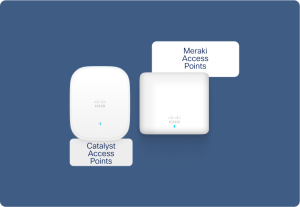
BLE communication revolves around advertising packets—brief bursts of data containing unique device IDs and metadata. These signals are captured by BLE-compatible receivers, such as Cisco Meraki or Catalyst APs, and forwarded to location engines for processing. Signal strength, represented by the RSSI (Received Signal Strength Indicator), is key for estimating proximity to access points and determining location within zones.
Key Technical Concepts:
- Advertising Intervals: Defines how frequently a tag broadcasts data (e.g., 100ms to 10 seconds).
- RSSI: Reflects signal power, correlating with distance from receivers.
- UUID/Major/Minor: Unique identifiers used to categorize and organize BLE tags.
- Protocols: Common standards like iBeacon, Eddystone, and AltBeacon ensure interoperability.
Cisco Spaces supports diverse BLE protocols, ingesting signals from multiple tag vendors in various formats, making it protocol-agnostic and highly scalable.
Sensor Integration & Environmental Monitoring
Many BLE tags now feature built-in environmental sensors to measure parameters such as:
- Temperature
- Humidity
- Motion (via accelerometers)
- Light or Vibration
These capabilities enable rich environmental monitoring for applications like hospitals, data centers, or cold chain logistics. For instance, BLE tags can transmit sensor data alongside location data, offering vital context—such as identifying a mobile fridge that is out of its optimal temperature range. Real-time alerts and compliance tracking can be seamlessly integrated via solutions like Cisco Spaces, ensuring organizations meet strict operational and environmental standards.
Configurable Behavior & Over-the-Air Updates
BLE tags offer the ability to be remotely configured for optimal performance, allowing adjustments to parameters such as transmission power, broadcast intervals, or sleep/wake schedules to suit specific needs. This flexibility is especially valuable for conserving battery life or fine-tuning signal reach in environments with varying requirements. Remote configuration reduces manual maintenance, as adjustments can be made without physically accessing each tag.
Over-the-Air (OTA) updates play a crucial role in large-scale deployments, enabling administrators to standardize and optimize tag behavior efficiently. Platforms like Cisco Spaces provide tools for bulk tag configuration, allowing organizations to manage power usage and signal behavior across thousands of BLE tags remotely. This ensures cost-effective asset management, scalability, and minimal downtime without the need for manual intervention for each tag.
Multi-Vendor Compatibility & Interoperability
BLE tags are built on standardized protocols, such as iBeacon, Eddystone, and AltBeacon, enabling organizations to leverage tags from multiple vendors. This interoperability gives retailers, healthcare providers, and enterprises the freedom to choose BLE tags with specific form factors, features, or price points that align with their unique use cases, such as compact tags for retail inventory or rugged tags for industrial environments.
Additionally, platforms like Cisco Spaces are vendor-agnostic, supporting a wide ecosystem of BLE tag manufacturers. This compatibility fosters greater flexibility and simplifies asset tracking deployments by allowing organizations to integrate various BLE tag types while maintaining a unified monitoring and analytics platform.
Zone & Event Triggering
BLE tags can also be configured to trigger automated actions based on their location or movement, which adds dynamic functionality to tracking systems. For instance, BLE tags can detect when assets or people enter or exit a geofenced zone, remain stationary for too long (indicating unused equipment), or experience sudden motion (e.g., detecting a potential theft attempt). These configurable triggers offer real-time insights into asset behavior and movement patterns.
Such events can activate notifications, generate dashboard alerts, or even initiate API calls within platforms like Cisco Spaces. These capabilities are particularly valuable in industries like retail, where entering a defined area could prompt tailored marketing offers; healthcare, where unused medical equipment is identified quickly; or IT asset management, where sudden movement of high-value devices can indicate potential security risks. Event-driven automation enhances operational insights and drives more proactive workflows.
Advantages of BLE Tags
BLE tags provide an efficient and scalable solution for a wide range of real-time tracking and monitoring needs. Their lightweight and versatile design, combined with advanced capabilities, delivers several key benefits for organizations across industries.
Gain Real-Time Asset Visibility
BLE tags enable frequent location updates, often every few seconds or minutes, for enhanced real-time asset visibility. They offer zone-level accuracy, allowing users to pinpoint assets within a specific area (e.g., “Room 302” rather than just “Building A”). This granular visibility reduces the time spent searching for shared equipment or mobile assets, ensuring that critical resources are always accounted for and readily accessible.
Scale Deployment With Low Maintenance
BLE tags are designed to scale seamlessly, enabling organizations to track thousands of assets with minimal overhead. Centralized management tools like Cisco Spaces allow administrators to configure and monitor tags in bulk, further reducing maintenance complexity. With a long battery life—often lasting years—replacement and servicing requirements are significantly minimized, making BLE tags a cost-effective choice for large-scale deployments.
Automate Workflows & Enhance Safety
The precise location and movement data provided by BLE tags can be used to trigger automations, such as generating alerts when equipment leaves a designated zone or remains unused for long periods. Safety applications include staff panic tags for emergencies or movement tracking during evacuations to ensure accountability. Additionally, BLE tags can generate historical data to support compliance, incident reviews, and operational audits, providing valuable insights for improving efficiency and safety protocols.
Reduce Total Cost of Ownership
BLE tags leverage existing Wi-Fi infrastructure, unlike technologies such as RFID, which require dedicated readers and additional hardware. Compared to GPS, BLE offers significant cost and coverage advantages for indoor use, eliminating the challenges of GPS’s limited functionality inside buildings. Moreover, the reduced need for manual intervention—like barcode scanning or physical asset searches—further lowers operational costs, making BLE tags an affordable and effective solution for real-time asset tracking.
Practical Applications of BLE Tags Across Industries
BLE tags have revolutionized tracking, automation, and monitoring across industries by providing real-time visibility, reducing operational inefficiencies, and enabling data-driven workflows. Below are some key industry applications:
Healthcare: Asset & Staff Management
In healthcare settings, BLE tags are essential for tracking critical medical equipment such as infusion pumps, wheelchairs, portable imaging systems, and surgical tools. They help reduce asset loss and ensure rapid retrieval of devices during emergencies, enabling faster response times and improved patient care. BLE tags also facilitate environmental monitoring for temperature-sensitive items, such as medication fridges or blood storage units, ensuring compliance with safety standards and reducing waste.
Staff-worn BLE tags further enhance hospital workflows through duress alerts, enabling hospital personnel to signal for help during emergencies, and workflow tracking, ensuring staff are efficiently deployed across high-demand areas. By integrating BLE data, healthcare facilities significantly improve operational efficiency, minimize wasted time locating equipment, and enhance both staff and patient safety.
Corporate Workplaces: Space Utilization & IT Asset Optimization
Businesses increasingly utilize BLE tags to optimize space utilization and improve sustainability. By tracking real-time occupancy, employers can gain insights into how employees move around offices, identify peak usage times, and measure meeting room or desk utilization. This allows organizations to make data-driven decisions about workspace layouts, reducing unused space and enhancing overall efficiency.
BLE tags are also valuable for IT asset management, tracking high-value devices like laptops, servers, or monitors. With BLE’s ability to locate assets or detect theft, organizations can avoid downtime caused by misplaced equipment. Additionally, BLE provides cost-efficiency and scalability, allowing companies to ensure seamless monitoring without the need for costly infrastructure like GPS or RFID readers.
Warehousing & Logistics: Inventory & Workflow Automation
BLE tags play a critical role in warehouses and logistics centers, enabling real-time tracking of equipment, pallets, and carts as they move throughout large facilities. Advanced zone-based automation, such as triggering alerts when materials enter or exit designated areas, helps streamline workflows and reduce errors. This functionality minimizes downtime and ensures inventory accuracy across fulfillment operations.
BLE tags also support cold chain monitoring, providing environmental data such as temperature and humidity for refrigerated goods. They offer asset location visibility and enable safety alerts for misplaced or high-risk materials, ensuring compliance with storage and shipping standards. With remarkable battery efficiency and indoor signal reliability, BLE technology is perfect for complex logistics workflows requiring long-term, scalable solutions.
Retail: Inventory Visibility & Customer Experience
Retailers use BLE tags to improve inventory tracking, supporting loss prevention and stock replenishment workflows. By monitoring the movement of merchandise, BLE tags can reduce stockouts and improve planogram compliance, ensuring shelves stay aligned with sales strategies. Incorporating BLE technology also enables self-guided shopping and indoor navigation, transforming the in-store experience.
Additionally, BLE tags facilitate proximity-based customer engagement, sending personalized promotions or product recommendations to shoppers via BLE beacon signals when they enter specific zones in the store. Through platforms like Cisco Spaces, BLE-triggered analytics and engagement tools empower retailers to evaluate foot traffic patterns, optimize store layouts, and provide targeted marketing, ultimately driving sales growth and improving the customer experience.
Future Innovations In BLE Technology
As BLE technology continues to evolve, future advancements aim to enhance location accuracy, energy efficiency, and sustainability, paving the way for even broader applications and improved performance. Below are two key areas of innovation.
Enhanced Location Accuracy
New BLE technologies like Angle-of-Arrival (AoA) and Angle-of-Departure (AoD) are ushering in a new era of precision tracking. These methods use signal angles captured by directional antenna arrays to achieve centimeter-level indoor accuracy, far surpassing traditional RSSI-based location tracking. However, deploying such advanced features requires compatible BLE 5.1+ tags and supporting hardware. These innovations will enable use cases such as high-precision robotic automation in warehouses, tracking surgical equipment in hospitals, or creating secure asset zones to prevent unauthorized movement of valuable resources.
Energy Harvesting And Self-Powered Solutions
The development of battery-free or ultra-low-power BLE tags that harvest energy from motion, light, or RF signals represents a significant leap in BLE technology. These self-powered tags reduce maintenance needs, offer greater sustainability, and extend deployment durations. Examples include solar-powered shipping tags or motion-activated occupancy sensors that can function autonomously in dynamic environments. While challenges like inconsistent indoor energy sources and limited vendor options persist, these technologies are poised to grow as BLE tracking expands into remote or harder-to-reach locations, where battery replacement is impractical. With further innovation, energy-harvesting BLE solutions will become a key driver for sustainable IoT applications.
Transform Your Spaces With BLE-Enabled Solutions from Cisco Spaces
BLE tags provide transformative benefits by enabling real-time asset visibility, automation of workflows, and safety enhancements. By minimizing manual intervention and reducing operational inefficiencies, BLE technology helps businesses reduce costs, improve asset management, and enhance the customer or employee experience. BLE tags are also versatile in application, unlocking opportunities for smarter space utilization, inventory tracking, and advanced environmental monitoring.
Cisco Spaces leverages BLE technology to create smart, connected buildings by integrating BLE tags with its platform for asset tracking and real-time analytics. Using your existing Cisco network infrastructure, Cisco access points serve as BLE gateways, eliminating the need for additional costly hardware. This seamless integration allows organizations to optimize operational workflows, monitor environmental conditions, improve location accuracy, and enhance safety in previously underutilized spaces.
Take the next step in transforming your organization with Cisco Spaces. Learn how BLE-enabled solutions like Cisco Spaces Asset Tracking can work for you, or dive into the Cisco Spaces Product Tour to discover why Cisco Spaces is the industry leader in location-based IoT solutions.
FAQs About BLE Tags
What are examples of BLE devices?
Examples of BLE devices include asset tracking tags, fitness trackers, smartwatches, smart home sensors, beacons for indoor navigation, and IoT devices for automation. BLE technology is also used in healthcare equipment, retail proximity marketing beacons, and motion-activated devices, enabling low-energy wireless communication across industries.
How does BLE technology work?
BLE (Bluetooth Low Energy) transmits data packets between devices using short bursts of wireless communication. It operates on the 2.4 GHz frequency and is optimized for low power consumption by staying idle when not transmitting. BLE supports real-time location tracking, environmental monitoring, and device-to-device communication over a range of up to 100 meters, depending on system design.
Is BLE faster than Wi-Fi?
No, BLE is not faster than WiFi but is optimized for different purposes. BLE focuses on low power consumption and short data packets, making it ideal for IoT and wearable devices. WiFi, on the other hand, supports higher speeds and larger data transmission but consumes more energy, making it better suited for high-bandwidth tasks like media streaming or large file transfers.