What if the infrastructure you’ve spent years investing could do far more than securely connect your business?
For decades, enterprise IT has been on a mission to connect everything.
People. Devices. Applications. Data.
And we’ve become remarkably good at it.
But here’s a question I find fascinating.
How much does your organization really know about what’s happening inside its physical spaces?
Think about a hospital. A patient is struggling to find the right department. A nurse is searching for critical equipment. An operations team is trying to understand where resources are needed. Or an office campus, where meeting rooms sit empty while employees struggle to find a place to collaborate.
These aren’t necessarily problems caused by a lack of technology. In fact, most enterprise buildings are filled with it.
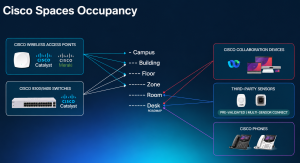
Wireless access points. Switches. Collaboration devices. Sensors. Business applications.
We’ve connected our buildings. But have we connected their intelligence?
The next frontier for enterprise AI is physical
AI is transforming how organizations use information, automate workflows, and make decisions.
But the physical world presents a different challenge.
AI cannot meaningfully reason about a building if it doesn’t understand where things are, how spaces are being used, what conditions are changing, or what is happening around the people inside it.
It needs something most enterprise systems have historically lacked.
Physical context.
And here’s the opportunity: much of the foundation for that context may already exist in the infrastructure you’ve deployed.
What if your wireless network, collaboration devices, IoT sensors, and enterprise systems could contribute to a shared understanding of your buildings?
What if maps, location, occupancy, and environmental intelligence became common capabilities that multiple applications could build upon?
Think about how your smartphone works. Its applications don’t each reinvent GPS, maps, or motion sensing. They build on shared capabilities to create entirely different experiences.
Why should our buildings be any different?
That’s the thinking behind Cisco Spaces OS: bringing together foundational building intelligence so organizations can create better experiences, improve operations, and build toward an AI-enabled physical world.
Not another disconnected technology stack for every new use case.
A shared foundation that becomes more valuable with every outcome.
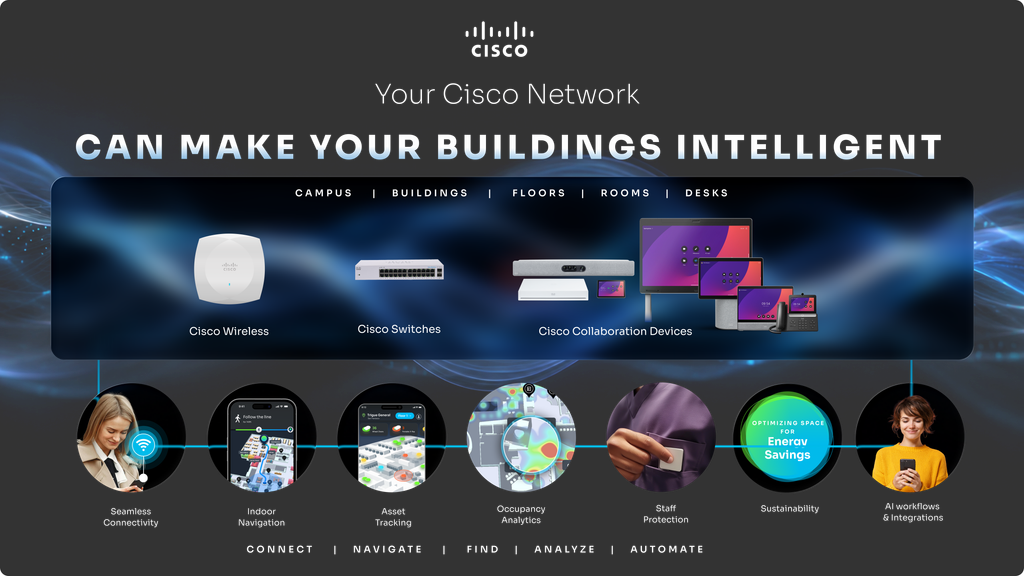
From connected buildings to intelligent experiences
The next era of intelligent buildings won’t come from adding technology for technology’s sake. It will come from making the intelligence already inside our buildings useful to the people who depend on them.
Your mission starts here by assembling heroes from IT & Business teams.
Network and infrastructure teams build the secure, connected foundation. Business IT and data teams bring systems and information together.
But the opportunities in your physical spaces are defined by the people closest to the experiences.
Real estate and facilities leaders rethinking how buildings are used and operated. Workplace experience and design teams creating better environments for employees. Patient experience and clinical engineering teams improving navigation, equipment availability, and hospital operations. OT and building management teams connecting the physical systems that keep facilities running. And marketing, customer experience, and loyalty teams imagining more connected, personalized experiences across physical and digital channels.
Different expertise. Different priorities. One shared mission: making the physical world work better for people.
Five missions. One intelligent foundation.
At our upcoming Cisco Spaces Digital Event, we’re bringing that mission to life through five real-world capabilities:
- CONNECT: Transform your existing wireless and collaboration infrastructure into a foundation for intelligent experiences—connecting people, devices, sensors, and building systems into a common framework.
- NAVIGATE: Help patients, visitors, employees, and students find their way through complex hospitals, campuses, and workplaces with digital indoor maps and turn-by-turn wayfinding.
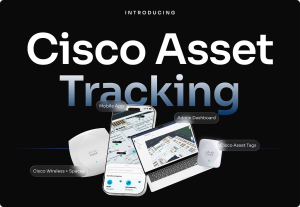
- FIND: Locate critical equipment and assets across hospitals, factories, and facilities using location intelligence and asset tracking—helping teams spend less time searching and more time doing what matters.
- ANALYZE: Understand how your buildings are actually being used, from meeting room occupancy and space utilization to environmental conditions, giving workplace, real estate, and facilities teams better information to make decisions.
- AUTOMATE: Connect physical-world intelligence to enterprise applications and AI workflows, helping organizations move from understanding what’s happening to taking meaningful action.
And we won’t just talk about what’s possible today. We’ll show you and announce new innovations.
Through product demonstrations and real customer stories, you’ll see how these capabilities come together on one shared foundation.
You’ll also hear from organizations helping pioneer this transformation with us—including General Motors, Philips, AIDA Cruises, Georgetown University, Asahi Beverages, and MYOB—as they share their experiences and the opportunities they’re unlocking with Cisco Spaces, Cisco Wireless and Cisco collaboration devices.
We’ll also unveil exciting new innovations across these five missions—designed to help you unlock even more value from your existing infrastructure. From new and improved features to smarter planning and deployment to bringing physical context into the world of AI agents.
Because the next chapter of enterprise AI may not begin with another application on a screen.
It may begin with the buildings all around us.
Your mission starts here
If you’re a CIO or technology leader, bring the people who understand both your infrastructure and the experiences you want to transform.
That could mean your network and enterprise architecture teams working alongside real estate, workplace experience, facilities, patient experience, clinical engineering, OT, marketing, or customer loyalty leaders.
Because the most interesting opportunities emerge when these teams start solving problems together.
Join us on November 5 for the Cisco Spaces Digital Event.
Discover the blueprint. See the demonstrations. Hear from the pioneers.